VERNISSAGE: 10. Sept. 2026, 18:00 – 21:00
Photobastei, Sihlquai 125, 8005 Zürich, Schweiz
–
ARTIST TALK WITH HILLARY HUANG: 12. Sept, 19:00h
CULTURAL COLLISIONS
A series of acrylic paintings exploring the silent friction and unexpected symmetries between Swiss and Chinese cultural legacies and beyond.
My early years in Switzerland were defined by isolation and profound cross-cultural transition. Moving between these seemingly disparate worlds forced me to observe life from completely shifted angles. I learned that embracing a new culture is easier said than done; yet, silently learning to understand Swiss-German became a quiet bridge of empathy.
This collection captures icons and motifs from both traditions side by side, stripping away geographical boundaries to uncover the uncanny harmonies that exist beneath. Through broad, tactile acrylic strokes and layered forms, art becomes the landscape where Swiss precision and Chinese tradition and other global icons collide, transcend, and ultimately heal.
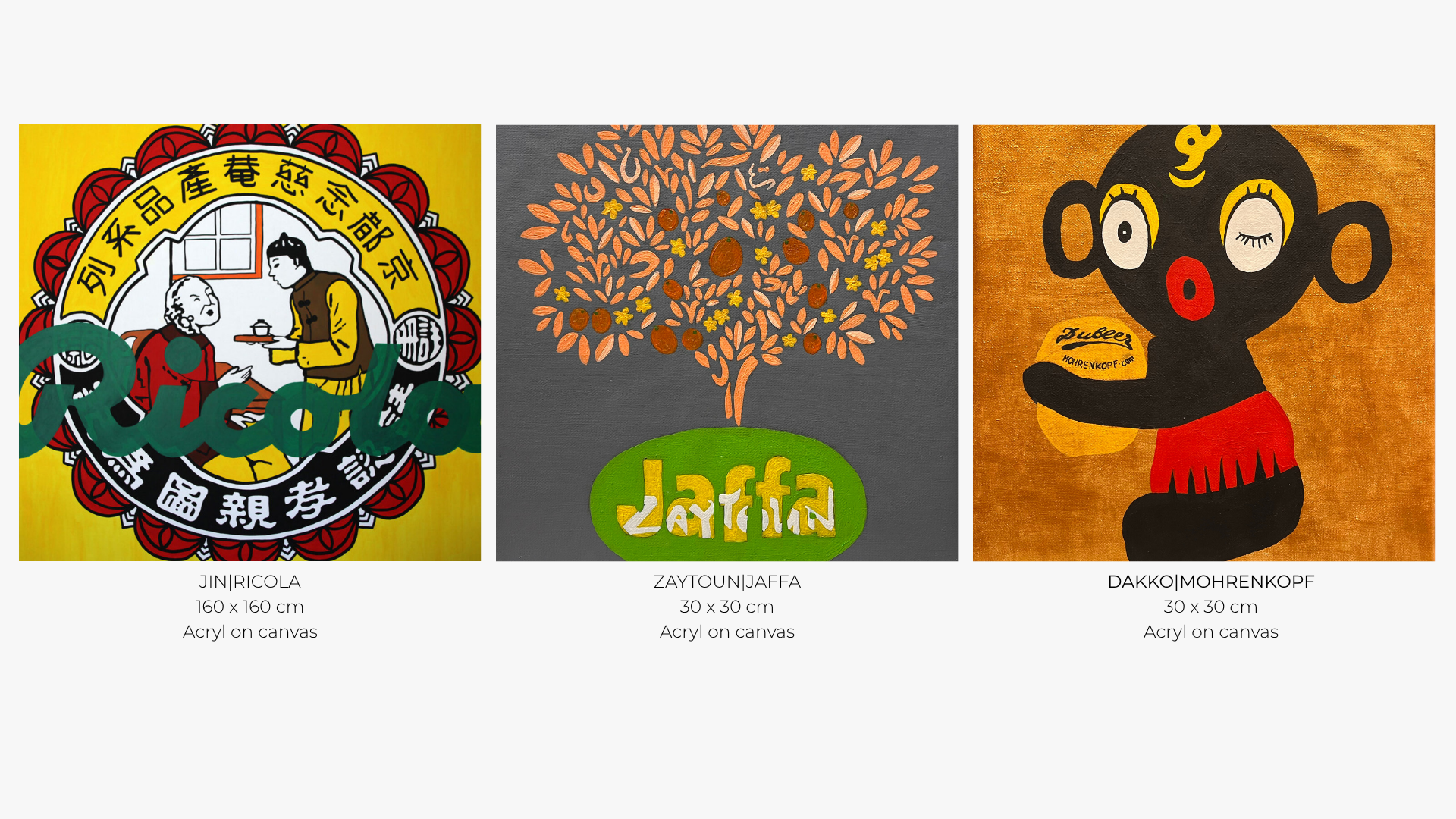
JIN | RICOLA (160 x 160 cm)
This large-scale canvas explores the juxtaposition of Eastern and Western holistic marketing traditions, structurally synthesising the visual idioms of the classic Swiss herbal brand Ricola with the traditional packaging of Hong Kong’s Nin Jiom (Jin Niom) herbal cough remedies. The composition interrogates how distinct graphic conventions—each deeply tied to localised notions of comfort, wellness, and corporate heritage—are reconciled within a unified, modern aesthetic framework.
Diese grossformatige Leinwand untersucht das Nebeneinander von östlichen und westlichen Traditionen des Gesundheitsmarketings. Das Werk verbindet die visuelle Bildsprache der klassischen Schweizer Kräutermarke Ricola mit der traditionellen Verpackung des Hongkonger Hustenmittels Nin Jiom (Jin Niom). Die Komposition hinterfragt, wie unterschiedliche Grafiktraditionen – die jeweils tief in lokalen Vorstellungen von Wohlbefinden, Trost und Unternehmenstradition verwurzelt sind – in einem einheitlichen, modernen ästhetischen Rahmen zusammengeführt werden.
ZAYTOUN | JAFFA (30 x 30 cm)
This painting critically engages with the complex geopolitical and economic history of Levantine agriculture. The work features a an olive tree—the core visual and agricultural icon of the contemporary Palestinian fair-trade enterprise, Zaytoun—which is now textually and visually overshadowed by the presence of oranges. This framing addresses the history of the Jaffa Orange, which was originally a historic Palestinian agricultural trademark prior to 1948, before being appropriated into a dominant state brand. The piece visualises the layering of these histories, examining how indigenous cultivation is structurally obscured by commercial narratives of displacement.
Dieses Gemälde setzt sich kritisch mit der komplexen geopolitischen und wirtschaftlichen Geschichte der Landwirtschaft in der Levante auseinander. Im Mittelpunkt steht ein Olivenbaum – das zentrale visuelle und landwirtschaftliche Symbol des heutigen palästinensischen Fair-Trade-Unternehmens Zaytoun, das jedoch textuell und visuell von Orangen überschattet wird. Diese Darstellung thematisiert die Geschichte der Jaffa-Orange, die vor 1948 ursprünglich ein historisches palästinensisches Markenzeichen war, bevor sie als staatliche Marke angeeignet wurde. Das Werk macht die Überlagerung dieser Geschichten sichtbar und untersucht, wie der einheimische Anbau durch kommerzielle Narrative der Vertreibung strukturell verdrängt wird.
DAKKO | MOHRENKOPF (30 x 30 cm)
This canvas functions as an exploration of commercial apathy and the persistence of problematic racial iconography in contemporary spaces. The painting merges the 1960s Japanese character sensation Dakko-chan with the current, active packaging layout of Dubler Mohrenkopf. By highlighting a corporate design that remains defiantly unaltered because Mr Dubler rejects the idea that confections carry political weight, the hybrid image underscores how post-war consumer trends and colonial-era marketing artifacts continue to actively circulate in modern international markets.
Diese Leinwand untersucht kommerzielle Gleichgültigkeit und das Fortbestehen problematischer rassistischer Ikonografie in der heutigen Zeit. Das Gemälde verschmilzt die japanische Kultfigur Dakko-chan aus den 1960er-Jahren mit dem aktuellen, aktiven Verpackungsdesign des Dubler Mohrenkopfs. Durch die Hervorhebung eines Corporate Designs, das unverändert bleibt, weil Herr Dubler die Vorstellung ablehnt, dass Süßwaren eine politische Bedeutung haben, unterstreicht dieses Hybridbild, wie Nachkriegs-Konsumtrends und koloniale Marketing-Relikte im modernen internationalen Markt weiter zirkulieren.
«Der Begriff ist nur diskriminierend, wenn er etwas Schlechtes bezeichnet»